Acidity Damage to Teeth: How Acid Can Harm Your Smile
Protect Your Teeth Before It’s Too Late
Many people associate acidity with stomach discomfort or heartburn, but few realize that excessive acid can also cause serious damage to their teeth. Whether the acid comes from acidic foods and beverages or from acid reflux, it gradually wears away the protective enamel, leaving your teeth vulnerable to sensitivity, discoloration, and decay.
At Elite Dental Clinic, we believe that understanding the effects of acid on your oral health is the first step toward preventing long-term dental problems.
What Is Tooth Enamel?
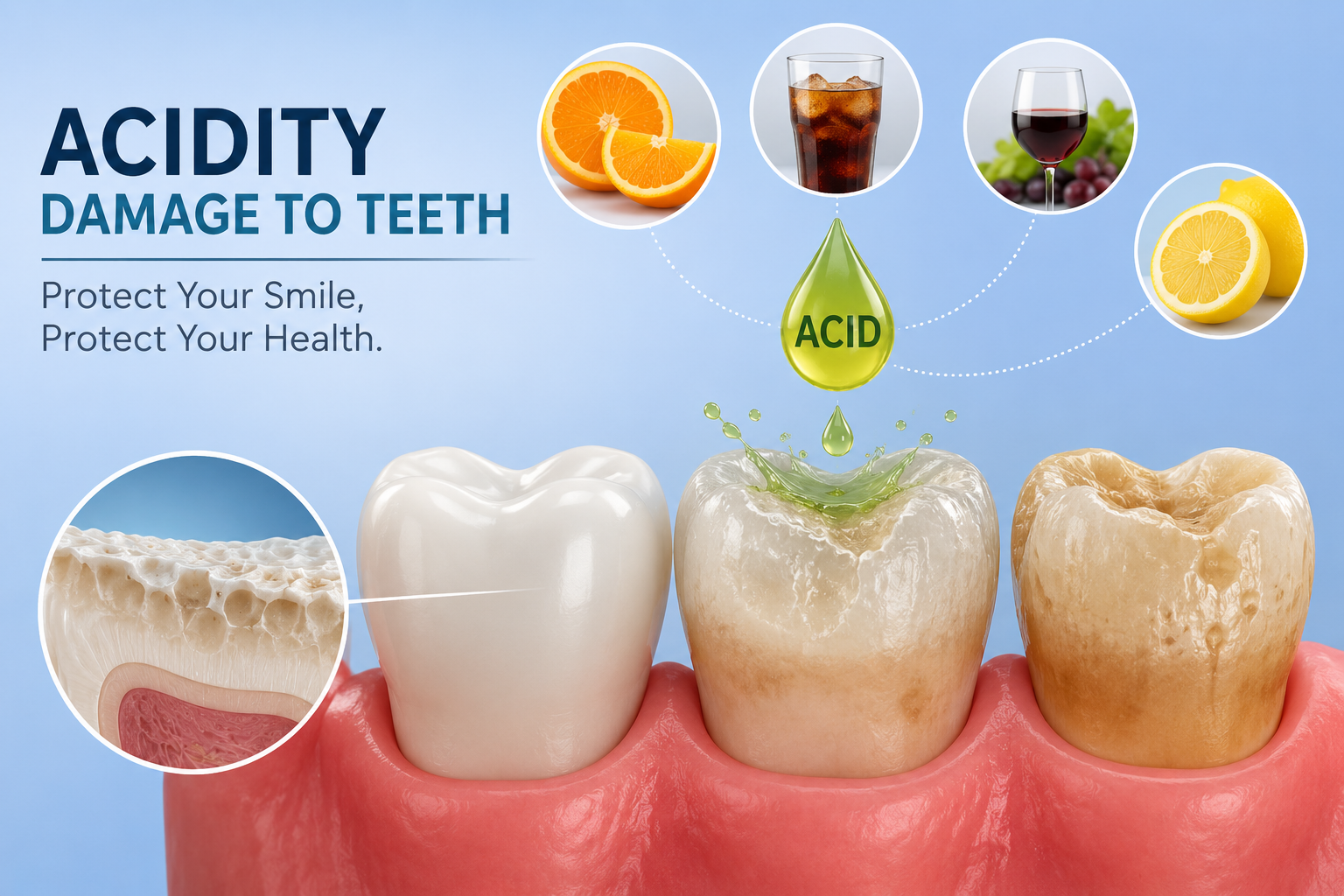
Tooth enamel is the hard, outer layer that protects your teeth from everyday wear and tear. Although it is the strongest substance in the human body, it cannot regenerate once it is lost. Acid slowly dissolves the minerals in enamel, making teeth weaker over time.
How Does Acidity Damage Teeth?
When acids come into contact with your teeth, they lower the pH level in your mouth. This causes enamel to soften and gradually erode. If acid exposure happens frequently, the enamel becomes thinner, exposing the sensitive inner layer called dentin.
Without healthy enamel, teeth become more prone to:
- Tooth sensitivity
- Cavities
- Yellowing teeth
- Chipped or cracked teeth
- Pain while eating hot, cold, or sweet foods
Common Causes of Acid Damage
1. Acidic Foods and Drinks
Frequent consumption of acidic foods and beverages can weaken enamel over time.
Examples include:
- Soft drinks
- Energy drinks
- Citrus fruits like oranges and lemons
- Vinegar-based foods
- Sports drinks
- Fruit juices
- Wine
2. Acid Reflux (GERD)
People suffering from acid reflux or frequent heartburn often experience stomach acid reaching the mouth. Since stomach acid is extremely strong, repeated exposure can significantly erode tooth enamel, especially on the inner surfaces of the teeth.
3. Frequent Vomiting
Conditions such as pregnancy-related morning sickness, eating disorders, or chronic gastrointestinal problems expose teeth to stomach acids repeatedly, accelerating enamel erosion.
4. Dry Mouth
Saliva naturally helps neutralize acids and repair early enamel damage. A dry mouth reduces this protection, allowing acids to remain on teeth for longer periods.
Warning Signs of Acid Erosion
You may be experiencing acid-related tooth damage if you notice:
- Increased tooth sensitivity
- Teeth appearing yellow
- Rounded or transparent tooth edges
- Small cracks or chips
- Teeth looking shorter
- Pain while brushing
- Rough or uneven tooth surfaces
Early treatment can prevent further damage and preserve your natural teeth.
How to Protect Your Teeth from Acid Damage
Drink Water Frequently
Water helps wash away acids and restores a healthy pH balance in your mouth.
Wait Before Brushing
After consuming acidic foods or drinks, wait about 30 minutes before brushing. Brushing immediately after acid exposure can remove softened enamel.
Use Fluoride Toothpaste
Fluoride strengthens enamel and helps protect teeth from acid attacks.
Limit Acidic Drinks
Reduce the intake of sodas, sports drinks, and citrus beverages. If you do drink them, use a straw to minimize contact with your teeth.
Chew Sugar-Free Gum
Sugar-free gum stimulates saliva production, helping neutralize acids naturally.
Treat Acid Reflux
If you frequently experience heartburn or acid reflux, seek medical advice. Managing the underlying condition can significantly reduce dental damage.
Visit Your Dentist Regularly
Routine dental examinations allow early detection of enamel erosion before it becomes severe.
Professional Treatments for Acid-Damaged Teeth
Depending on the extent of enamel loss, your dentist may recommend:
- Fluoride treatments to strengthen weakened enamel
- Tooth-colored fillings for small areas of erosion
- Dental bonding to restore worn surfaces
- Veneers for cosmetic protection
- Dental crowns for severely damaged teeth
Early intervention can often prevent the need for more extensive treatment.
Can Enamel Grow Back?
Unfortunately, lost enamel cannot regenerate naturally. However, early enamel damage can often be managed through remineralization with fluoride, good oral hygiene, and dietary changes. This is why early diagnosis is so important.
Prevention Is Better Than Treatment
Simple lifestyle changes can greatly reduce the risk of acid erosion:
- Drink plenty of water.
- Eat a balanced diet.
- Avoid frequent snacking on acidic foods.
- Brush twice daily with fluoride toothpaste.
- Floss every day.
- Schedule routine dental check-ups.
Keep Your Smile Strong with Elite Dental Clinic
Acid damage often develops gradually and may go unnoticed until significant enamel has been lost. If you’re experiencing tooth sensitivity, discoloration, or signs of enamel wear, don’t ignore the symptoms. Early diagnosis and professional care can help protect your smile for years to come.
At Elite Dental Clinic, our experienced dental team provides comprehensive examinations, preventive care, and personalized treatment plans to keep your teeth healthy and strong. Whether you’re dealing with acid erosion, tooth sensitivity, or general dental concerns, we’re here to help you achieve a confident, lasting smile.
Book your appointment today and let Elite Dental Clinic help you protect your smile from acid damage.