• Acidity Damage to Teeth: How Acid Can Harm Your Smile

    Elite Dental Clinic

    Acidity Damage to Teeth: How Acid Can Harm Your Smile

    Protect Your Teeth Before It’s Too Late

    Many people associate acidity with stomach discomfort or heartburn, but few realize that excessive acid can also cause serious damage to their teeth. Whether the acid comes from acidic foods and beverages or from acid reflux, it gradually wears away the protective enamel, leaving your teeth vulnerable to sensitivity, discoloration, and decay.

    At Elite Dental Clinic, we believe that understanding the effects of acid on your oral health is the first step toward preventing long-term dental problems.


    What Is Tooth Enamel?

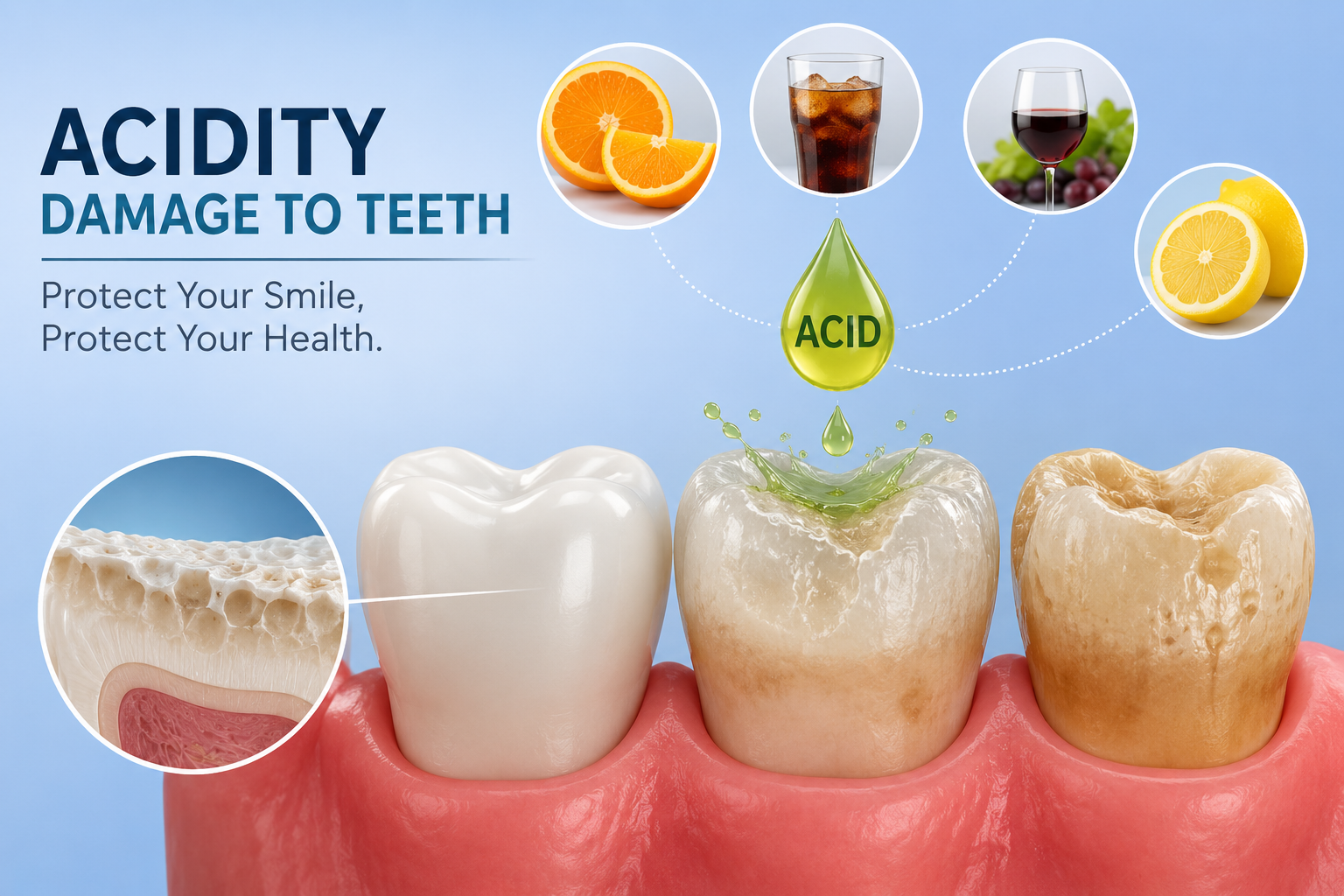
    Tooth enamel is the hard, outer layer that protects your teeth from everyday wear and tear. Although it is the strongest substance in the human body, it cannot regenerate once it is lost. Acid slowly dissolves the minerals in enamel, making teeth weaker over time.


    How Does Acidity Damage Teeth?

    When acids come into contact with your teeth, they lower the pH level in your mouth. This causes enamel to soften and gradually erode. If acid exposure happens frequently, the enamel becomes thinner, exposing the sensitive inner layer called dentin.

    Without healthy enamel, teeth become more prone to:

    1. Tooth sensitivity
    2. Cavities
    3. Yellowing teeth
    4. Chipped or cracked teeth
    5. Pain while eating hot, cold, or sweet foods

    Common Causes of Acid Damage

    1. Acidic Foods and Drinks

    Frequent consumption of acidic foods and beverages can weaken enamel over time.

    Examples include:

    1. Soft drinks
    2. Energy drinks
    3. Citrus fruits like oranges and lemons
    4. Vinegar-based foods
    5. Sports drinks
    6. Fruit juices
    7. Wine

    2. Acid Reflux (GERD)

    People suffering from acid reflux or frequent heartburn often experience stomach acid reaching the mouth. Since stomach acid is extremely strong, repeated exposure can significantly erode tooth enamel, especially on the inner surfaces of the teeth.


    3. Frequent Vomiting

    Conditions such as pregnancy-related morning sickness, eating disorders, or chronic gastrointestinal problems expose teeth to stomach acids repeatedly, accelerating enamel erosion.


    4. Dry Mouth

    Saliva naturally helps neutralize acids and repair early enamel damage. A dry mouth reduces this protection, allowing acids to remain on teeth for longer periods.


    Warning Signs of Acid Erosion

    You may be experiencing acid-related tooth damage if you notice:

    1. Increased tooth sensitivity
    2. Teeth appearing yellow
    3. Rounded or transparent tooth edges
    4. Small cracks or chips
    5. Teeth looking shorter
    6. Pain while brushing
    7. Rough or uneven tooth surfaces

    Early treatment can prevent further damage and preserve your natural teeth.


    How to Protect Your Teeth from Acid Damage

    Drink Water Frequently

    Water helps wash away acids and restores a healthy pH balance in your mouth.

    Wait Before Brushing

    After consuming acidic foods or drinks, wait about 30 minutes before brushing. Brushing immediately after acid exposure can remove softened enamel.

    Use Fluoride Toothpaste

    Fluoride strengthens enamel and helps protect teeth from acid attacks.

    Limit Acidic Drinks

    Reduce the intake of sodas, sports drinks, and citrus beverages. If you do drink them, use a straw to minimize contact with your teeth.

    Chew Sugar-Free Gum

    Sugar-free gum stimulates saliva production, helping neutralize acids naturally.

    Treat Acid Reflux

    If you frequently experience heartburn or acid reflux, seek medical advice. Managing the underlying condition can significantly reduce dental damage.

    Visit Your Dentist Regularly

    Routine dental examinations allow early detection of enamel erosion before it becomes severe.


    Professional Treatments for Acid-Damaged Teeth

    Depending on the extent of enamel loss, your dentist may recommend:

    1. Fluoride treatments to strengthen weakened enamel
    2. Tooth-colored fillings for small areas of erosion
    3. Dental bonding to restore worn surfaces
    4. Veneers for cosmetic protection
    5. Dental crowns for severely damaged teeth

    Early intervention can often prevent the need for more extensive treatment.


    Can Enamel Grow Back?

    Unfortunately, lost enamel cannot regenerate naturally. However, early enamel damage can often be managed through remineralization with fluoride, good oral hygiene, and dietary changes. This is why early diagnosis is so important.


    Prevention Is Better Than Treatment

    Simple lifestyle changes can greatly reduce the risk of acid erosion:

    1. Drink plenty of water.
    2. Eat a balanced diet.
    3. Avoid frequent snacking on acidic foods.
    4. Brush twice daily with fluoride toothpaste.
    5. Floss every day.
    6. Schedule routine dental check-ups.

    Keep Your Smile Strong with Elite Dental Clinic

    Acid damage often develops gradually and may go unnoticed until significant enamel has been lost. If you’re experiencing tooth sensitivity, discoloration, or signs of enamel wear, don’t ignore the symptoms. Early diagnosis and professional care can help protect your smile for years to come.

    At Elite Dental Clinic, our experienced dental team provides comprehensive examinations, preventive care, and personalized treatment plans to keep your teeth healthy and strong. Whether you’re dealing with acid erosion, tooth sensitivity, or general dental concerns, we’re here to help you achieve a confident, lasting smile.

    Book your appointment today and let Elite Dental Clinic help you protect your smile from acid damage.

    Tiny Teeth, Big Care: Why Children’s Dental Health Matters

    Elite Dental Clinic

    Tiny Teeth, Big Care: Why Children’s Dental Health Matters

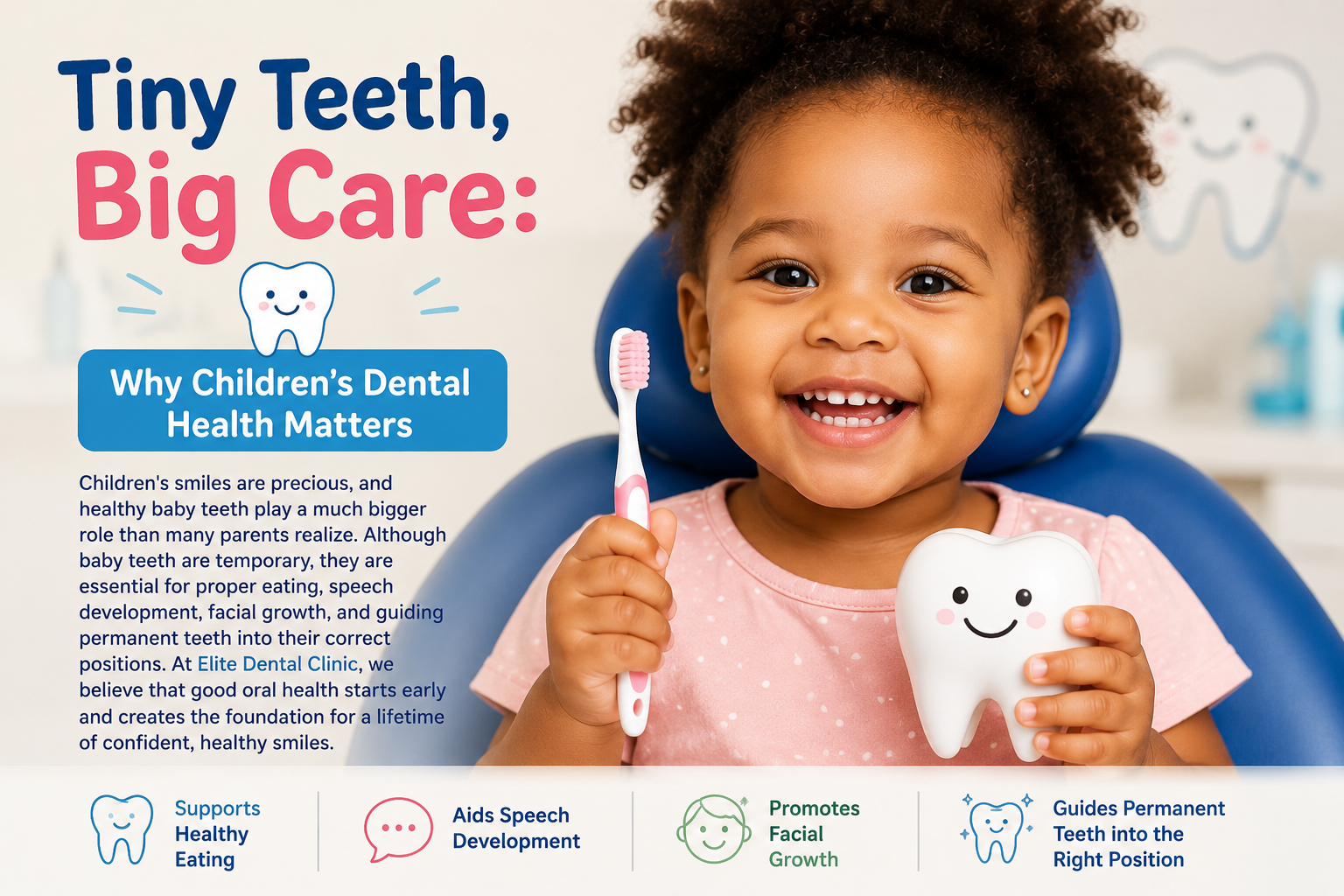
    Children’s smiles are precious, and healthy baby teeth play a much bigger role than many parents realize. Although baby teeth are temporary, they are essential for proper eating, speech development, facial growth, and guiding permanent teeth into their correct positions. At Elite Dental Clinic, we believe that good oral health starts early and creates the foundation for a lifetime of confident, healthy smiles.

    Why Are Baby Teeth Important?

    Many parents assume that baby teeth don’t require much attention because they eventually fall out. However, healthy primary teeth are crucial because they:

    1. Help children chew food properly for healthy nutrition.
    2. Support clear speech and language development.
    3. Maintain space for permanent teeth.
    4. Build confidence through a healthy, beautiful smile.
    5. Prevent pain and infections that can affect overall health.

    Neglecting baby teeth can lead to cavities, discomfort, and even problems with the development of adult teeth.

    Common Dental Problems in Children

    Children are naturally curious and often enjoy sugary treats, making them more vulnerable to dental problems. Some of the most common issues include:

    Tooth Decay (Cavities)

    Cavities are among the most common childhood diseases. Frequent consumption of sugary snacks and drinks, along with poor brushing habits, can quickly lead to tooth decay.

    Early Childhood Caries

    Also known as baby bottle tooth decay, this condition develops when children are frequently exposed to sugary liquids, especially before bedtime.

    Gum Problems

    Swollen or bleeding gums may occur due to plaque buildup or inadequate brushing.

    Thumb Sucking and Pacifier Habits

    While common in infancy, prolonged thumb sucking or pacifier use may affect jaw development and tooth alignment.

    Dental Injuries

    Active children may experience chipped, cracked, or knocked-out teeth during sports or play.

    Healthy Dental Habits Every Parent Should Teach

    Building good habits early makes dental care easier as children grow.

    1. Brush twice daily using a soft toothbrush.
    2. Use fluoride toothpaste in the recommended amount for your child’s age.
    3. Begin flossing once teeth start touching each other.
    4. Limit sugary snacks, candies, and soft drinks.
    5. Encourage drinking plenty of water.
    6. Make brushing fun by using songs, colorful toothbrushes, or reward charts.

    Consistency is the key to lifelong oral health.

    When Should Your Child Visit the Dentist?

    The first dental visit should take place by your child’s first birthday or within six months after the first tooth appears. Early visits allow dentists to:

    1. Monitor healthy tooth development.
    2. Detect dental problems before they become serious.
    3. Provide preventive treatments.
    4. Guide parents on proper brushing and nutrition.
    5. Help children become comfortable with dental visits.

    Regular dental check-ups every six months help maintain healthy smiles and reduce the need for complex treatments later.

    Preventing Cavities

    Prevention is always better than treatment. Parents can help reduce cavity risk by:

    1. Avoiding bedtime bottles filled with milk or juice.
    2. Offering healthy snacks such as fruits, vegetables, cheese, and yogurt.
    3. Encouraging water after meals.
    4. Supervising brushing until children develop proper brushing skills.
    5. Scheduling routine professional dental cleanings and fluoride treatments.

    Creating Positive Dental Experiences

    Children who enjoy positive dental visits are more likely to continue good oral health habits throughout adulthood. A gentle, friendly environment helps reduce fear and builds trust with dental professionals.

    At Elite Dental Clinic, we focus on creating a warm and welcoming experience where children feel safe, comfortable, and confident during every visit.

    Why Choose Elite Dental Clinic for Your Child?

    Our experienced dental team understands the unique needs of young patients. We emphasize gentle care, preventive dentistry, and education to help children develop healthy oral habits from an early age. Whether it’s a routine check-up, preventive treatment, or addressing a dental concern, we are committed to providing compassionate, high-quality care for every child.

    Give Your Child the Gift of a Healthy Smile

    Healthy smiles begin with healthy habits. By starting dental care early and maintaining regular check-ups, you can help your child enjoy strong teeth, healthy gums, and the confidence to smile brightly for years to come.

    Book your child’s dental check-up today at Elite Dental Clinic and let us help protect those tiny teeth with the big care they deserve!

    Tooth Swelling and Tooth Sensitivity: Causes, Symptoms & Treatment

    Elite Dental Clinic

    Tooth Swelling and Tooth Sensitivity: Causes, Symptoms & Treatment

    Tooth swelling and tooth sensitivity are common dental problems that should never be ignored. While a brief sensitivity to hot or cold foods may seem harmless, persistent pain or swelling often indicates an underlying dental condition that requires professional attention. At Elite Dental Clinic, we believe that early diagnosis and timely treatment can prevent serious complications, preserve your natural teeth, and restore your comfort.


    What Is Tooth Swelling?

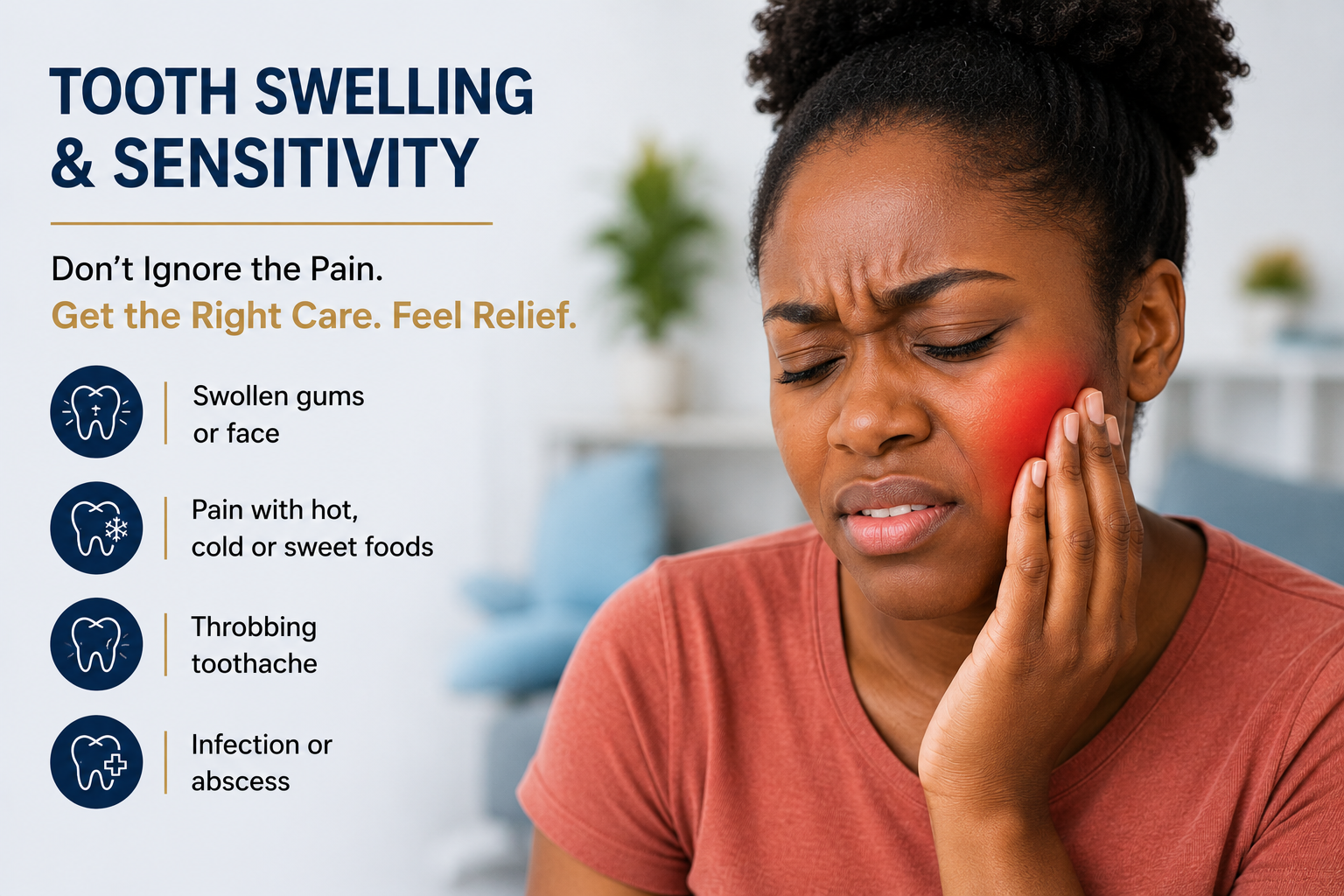
    Tooth swelling usually occurs when an infection or inflammation develops around the tooth or gums. It may affect the gums surrounding a single tooth or extend to the cheek or jaw in more severe cases. Swelling is often your body’s response to bacteria, injury, or advanced tooth decay.

    Common Causes of Tooth Swelling

    • Dental Abscess: A bacterial infection that forms a pocket of pus near the tooth root.
    • Tooth Decay: Untreated cavities can reach the tooth’s pulp, causing infection and swelling.
    • Gum Disease: Gingivitis and periodontitis can lead to inflamed, swollen, and bleeding gums.
    • Cracked or Broken Tooth: Cracks allow bacteria to enter the inner layers of the tooth.
    • Wisdom Tooth Problems: Partially erupted wisdom teeth can trap food and bacteria, leading to swelling and infection.

    What Is Tooth Sensitivity?

    Tooth sensitivity is a sharp, temporary pain that occurs when consuming hot, cold, sweet, or acidic foods and drinks. It happens when the protective enamel wears away or the tooth roots become exposed, allowing external stimuli to reach the nerves inside the tooth.

    Common Causes of Tooth Sensitivity

    1. Worn or damaged tooth enamel
    2. Receding gums
    3. Tooth decay or cavities
    4. Teeth grinding (Bruxism)
    5. Cracked or chipped teeth
    6. Recent dental treatments (temporary sensitivity)
    7. Frequent consumption of acidic foods and beverages

    Signs and Symptoms

    You may be experiencing tooth swelling or sensitivity if you notice:

    1. Swollen or tender gums
    2. Persistent toothache
    3. Sharp pain while eating or drinking hot or cold foods
    4. Pain when chewing or biting
    5. Facial or jaw swelling
    6. Bad taste or pus near the affected tooth
    7. Bleeding gums
    8. Sensitivity to sweet or acidic foods

    If these symptoms persist for more than a day or worsen over time, it’s important to seek professional dental care promptly.


    When Should You Visit a Dentist?

    Do not delay treatment if you experience:

    1. Severe or persistent tooth pain
    2. Swelling that spreads to the face or jaw
    3. Fever along with dental pain
    4. Difficulty opening your mouth or swallowing
    5. Continuous sensitivity lasting several days
    6. Swelling accompanied by pus or discharge

    Early intervention can prevent infections from spreading and reduce the need for more extensive dental procedures.


    How Is Tooth Swelling and Sensitivity Treated?

    Treatment depends on the underlying cause. At Elite Dental Clinic, we perform a comprehensive examination using advanced diagnostic tools to identify the problem and recommend the most effective treatment.

    Treatment options may include:

    1. Professional dental cleaning
    2. Tooth-colored fillings for cavities
    3. Root canal treatment for infected teeth
    4. Gum disease treatment
    5. Dental crowns for cracked or weakened teeth
    6. Tooth extraction when necessary
    7. Desensitizing treatments for sensitive teeth
    8. Personalized oral hygiene recommendations

    Tips to Prevent Tooth Swelling and Sensitivity

    Maintaining good oral hygiene is the best way to protect your teeth and gums.

    1. Brush twice daily using a soft-bristled toothbrush.
    2. Use fluoride toothpaste designed for sensitive teeth.
    3. Floss every day to remove plaque between teeth.
    4. Limit sugary and acidic foods and beverages.
    5. Avoid chewing hard objects like ice or pens.
    6. Wear a night guard if you grind your teeth.
    7. Schedule routine dental check-ups every six months.

    Why Choose Elite Dental Clinic?

    At Elite Dental Clinic, we are committed to providing compassionate, patient-focused dental care in a comfortable environment. Our experienced team uses modern technology and evidence-based treatments to diagnose and manage tooth swelling, sensitivity, and other dental concerns efficiently. Whether you’re experiencing mild discomfort or severe pain, we’re here to help restore your oral health and confidence.


    Don’t Ignore the Warning Signs

    Tooth swelling and sensitivity are often early indicators of dental problems that can worsen without treatment. Seeking professional care at the first sign of discomfort can help prevent infection, protect your natural teeth, and keep your smile healthy for years to come.

    Book your appointment with Elite Dental Clinic today and take the first step toward a healthier, pain-free smile.

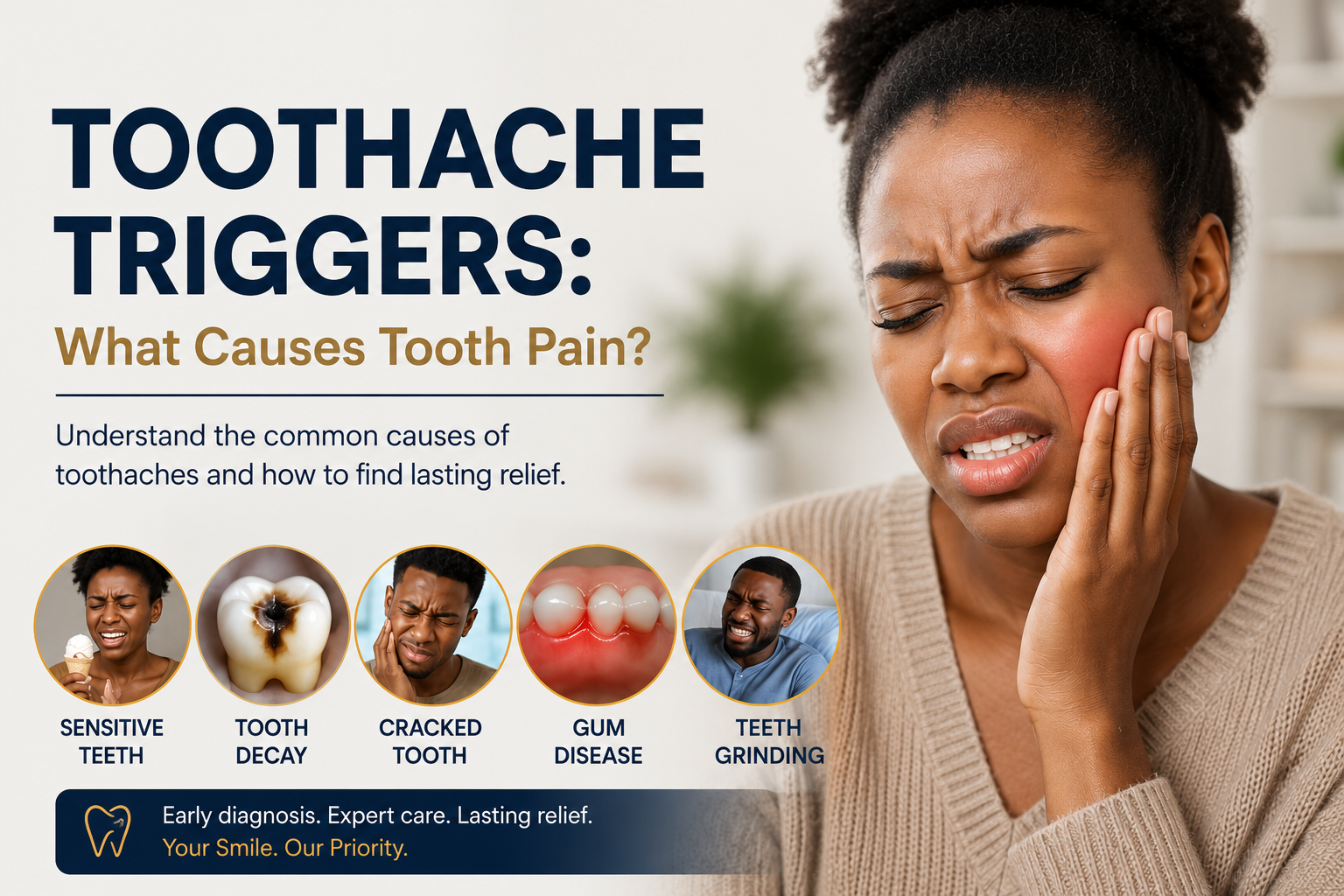
    Toothache Triggers: What Causes Tooth Pain?

    Elite Dental Clinic

    Toothache Triggers: What Causes Tooth Pain?

    Toothache Triggers: What Causes Tooth Pain?

    A toothache is more than just an inconvenience—it is often your body’s way of telling you that something isn’t right. While some toothaches are mild and temporary, others may indicate a serious dental problem that requires immediate attention. Identifying the cause of your tooth pain early can help prevent complications and protect your oral health.

    At Elite Dental Clinic, we believe that understanding the common triggers of toothaches empowers patients to seek timely treatment and maintain healthy smiles.

    Common Toothache Triggers

    1. Tooth Decay (Cavities)

    The most common cause of tooth pain is tooth decay. When bacteria produce acids that erode the enamel, cavities form. If left untreated, the decay reaches the inner layers of the tooth, causing sensitivity, pain, and infection.

    Signs:

    1. Persistent tooth pain
    2. Sensitivity to sweets
    3. Pain while chewing
    4. Visible holes or dark spots

    2. Tooth Sensitivity

    If you experience sharp pain while eating ice cream or drinking hot coffee, you may have sensitive teeth. This happens when the protective enamel wears away or the gums recede, exposing the dentin underneath.

    Common triggers:

    1. Hot beverages
    2. Cold foods
    3. Sweet foods
    4. Acidic drinks

    3. Cracked or Chipped Tooth

    Even a small crack may expose the sensitive inner portion of your tooth, leading to pain while biting or chewing. Cracks may develop due to accidents, teeth grinding, or biting hard foods.

    Symptoms include:

    1. Pain while chewing
    2. Sensitivity to temperature changes
    3. Intermittent discomfort

    4. Gum Disease

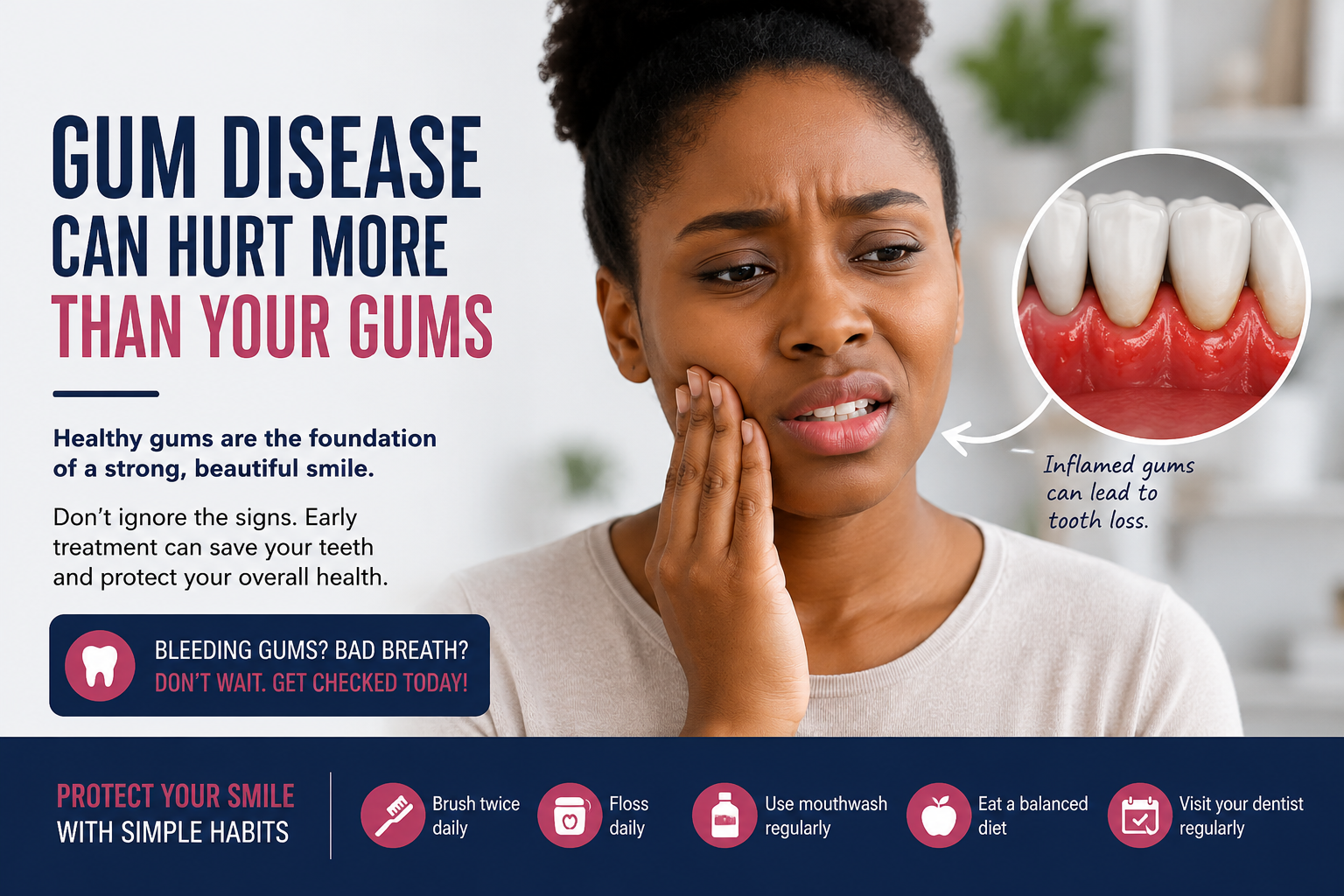
    Healthy gums support healthy teeth. When plaque builds up along the gumline, inflammation and infection can occur, causing pain, swelling, bleeding, and even loose teeth if untreated.

    Warning signs:

    1. Bleeding gums
    2. Swollen gums
    3. Bad breath
    4. Tooth mobility

    5. Teeth Grinding (Bruxism)

    Many people grind or clench their teeth while sleeping without realizing it. Over time, this places excessive pressure on the teeth and jaw, causing soreness, tooth wear, and headaches.

    6. Impacted Wisdom Teeth

    Wisdom teeth that do not erupt properly can push against neighboring teeth, causing pain, swelling, infection, and difficulty opening the mouth.


    7. Dental Abscess

    A dental abscess is a pocket of infection that develops inside the tooth or gums. It is a dental emergency that requires prompt treatment.

    Symptoms include:

    1. Severe throbbing pain
    2. Facial swelling
    3. Fever
    4. Bad taste in the mouth
    5. Swollen lymph nodes

    8. Loose or Damaged Fillings

    Old fillings or dental restorations can wear out over time, allowing bacteria to enter the tooth and cause sensitivity or pain.


    9. Sinus Infection

    Sometimes the pain isn’t actually coming from the tooth. Sinus infections can create pressure around the upper teeth, resulting in discomfort that mimics a toothache.


    10. Food Trapped Between Teeth

    Even something as simple as food lodged between your teeth can irritate the gums and cause temporary pain. Proper brushing and flossing usually resolve the issue.

    When Should You Visit a Dentist?

    Seek professional dental care immediately if your toothache:

    1. Lasts longer than 24–48 hours
    2. Is severe or worsening
    3. Is accompanied by swelling or fever
    4. Makes chewing difficult
    5. Causes facial swelling or pus discharge
    6. Occurs after an injury

    Early diagnosis can save your tooth and prevent more extensive treatment later.

    How to Prevent Toothaches

    1. Brush twice daily using fluoride toothpaste.
    2. Floss every day.
    3. Limit sugary and acidic foods.
    4. Wear a mouthguard if you grind your teeth.
    5. Visit your dentist every six months for routine check-ups.
    6. Treat cavities and gum disease before they worsen.

    Elite Dental Clinic – Caring for Your Smile

    At Elite Dental Clinic, our experienced dental professionals use advanced diagnostic technology to identify the exact cause of your toothache and provide personalized treatment. Whether it’s a simple filling, root canal therapy, gum treatment, or preventive care, we’re committed to restoring your comfort and protecting your smile.

    Don’t ignore tooth pain—early treatment is always the best treatment. Book your dental consultation today and let Elite Dental Clinic help you smile pain-free.

    Elite Dental Clinic
    Privacy Overview

    This website uses cookies so that we can provide you with the best user experience possible. Cookie information is stored in your browser and performs functions such as recognising you when you return to our website and helping our team to understand which sections of the website you find most interesting and useful.